
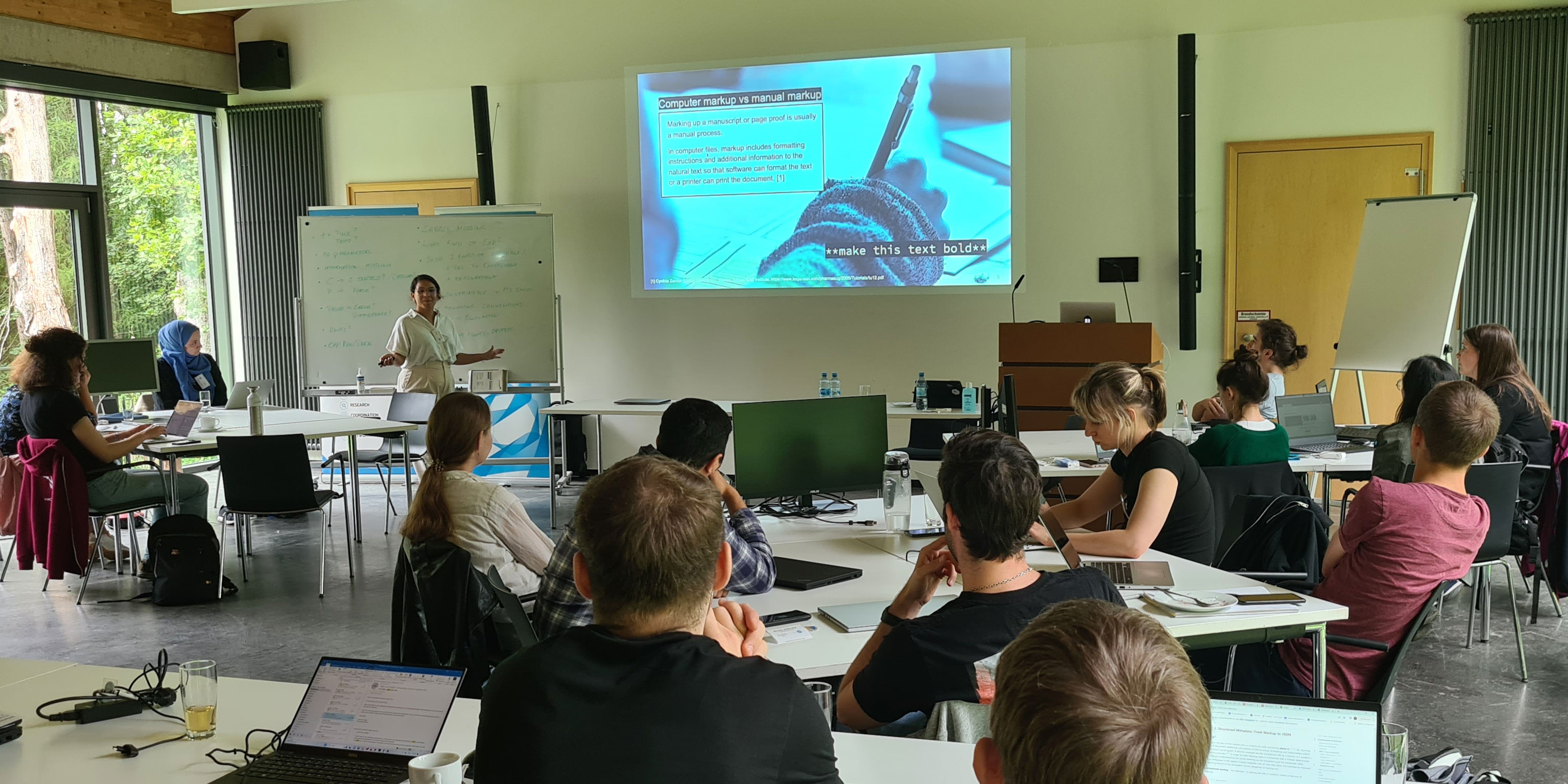
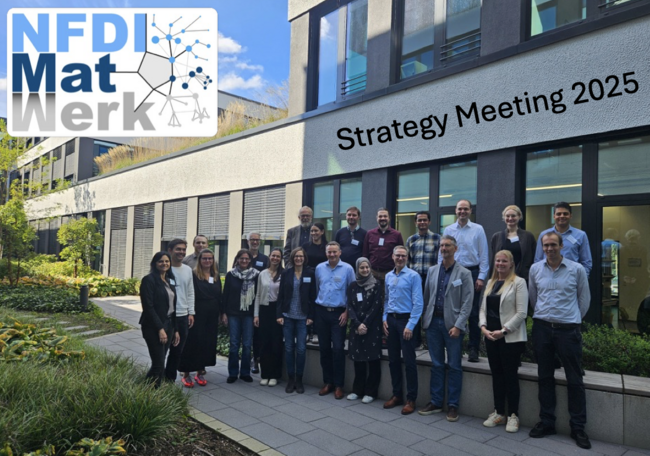
A central outcome of the meeting was the definition of NFDI-MatWerk’s main development areas – the Infrastructure Use Cases (IUCs) – and their specific roles for the upcoming year. In addition, overarching focus areas such as the integration of AI topics were agreed upon. The next development steps for the consortium’s central backbone, the Knowledge Graph, were also identified, aiming to enhance its usability for scientists in materials science and engineering.
Another key topic was dissemination and roll-out activities. Discussions focused on core elements such as NFDI-MatWerk’s website strategy and the expansion of the roll-out’s role in communicating and supporting infrastructure use.
A particular highlight was the external contribution by Dr. Björn Grüning (University of Freiburg / DataPLANT), who provided an inspiring impulse presentation on the Galaxy Project. His insights into training concepts and community-driven infrastructures offered valuable perspectives for NFDI-MatWerk’s future efforts, particularly regarding training and user engagement.
The meeting concluded with several strategic decisions and clearly defined next steps, establishing a strong foundation for the continued development of NFDI-MatWerk in 2026.